Cloud migration is often sold as a fast, clean path to modernization — lower costs, better scalability, improved security. But when the move is rushed or poorly architected, companies face outages, spiraling spend, data loss, and operational disruption that can easily exceed the expected savings.
Most failures happen not because the cloud is risky — but because the migration strategy is.
"Cloud success requires strategy, not speed. The companies that migrate successfully treat cloud as a strategic investment — not a technical shortcut."
Mistake #1 — Migrating Without a Clear Architecture Plan
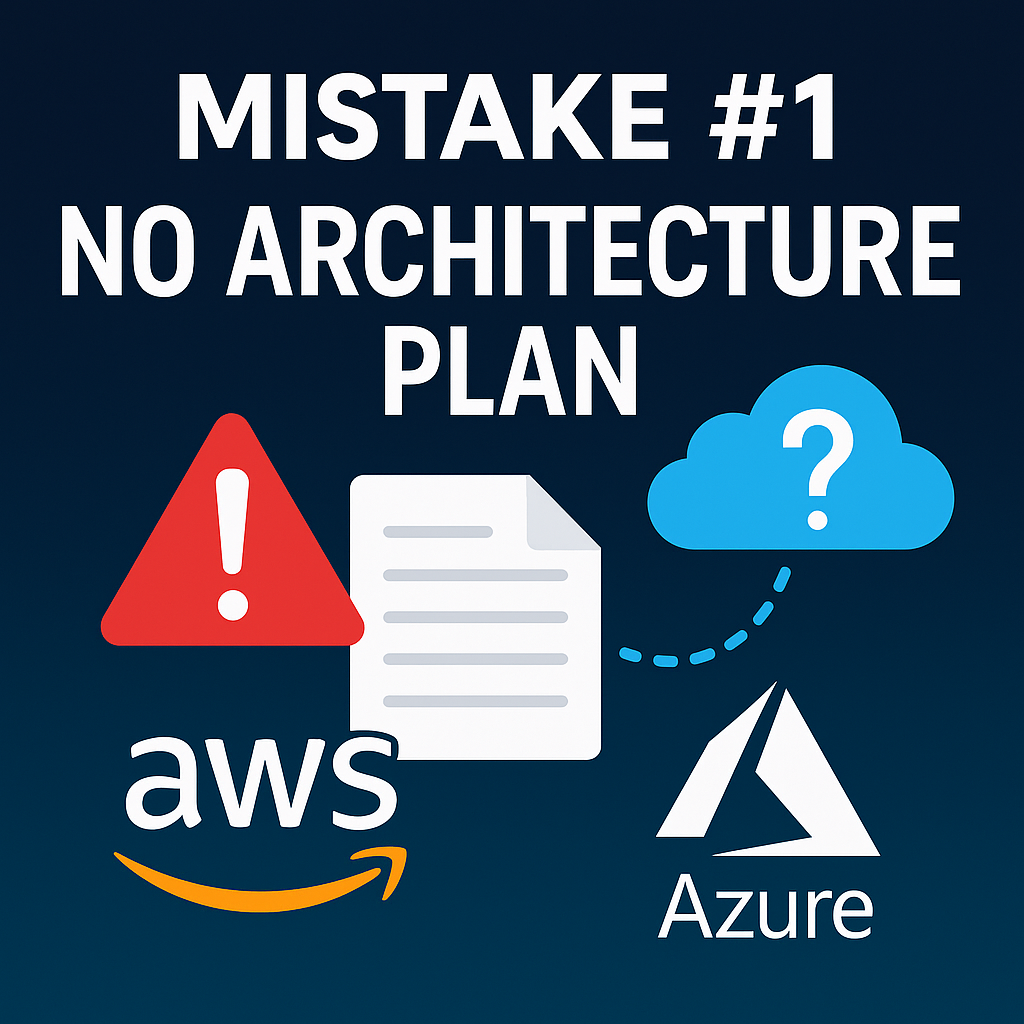
Many organizations "lift-and-shift" workloads into AWS or Azure without analyzing dependencies between apps, data gravity, network traffic patterns, performance requirements, or security controls.
When architecture work is skipped, costs triple, latency spikes, applications break, and identity and security gaps appear.
- Conduct workload discovery and dependency mapping
- Define your target architecture before executing
- Choose modernization over simple re-hosting where appropriate
- Validate capacity, storage tiers, and performance needs
Mistake #2 — Underestimating Cloud Costs (The Silent Budget Killer)
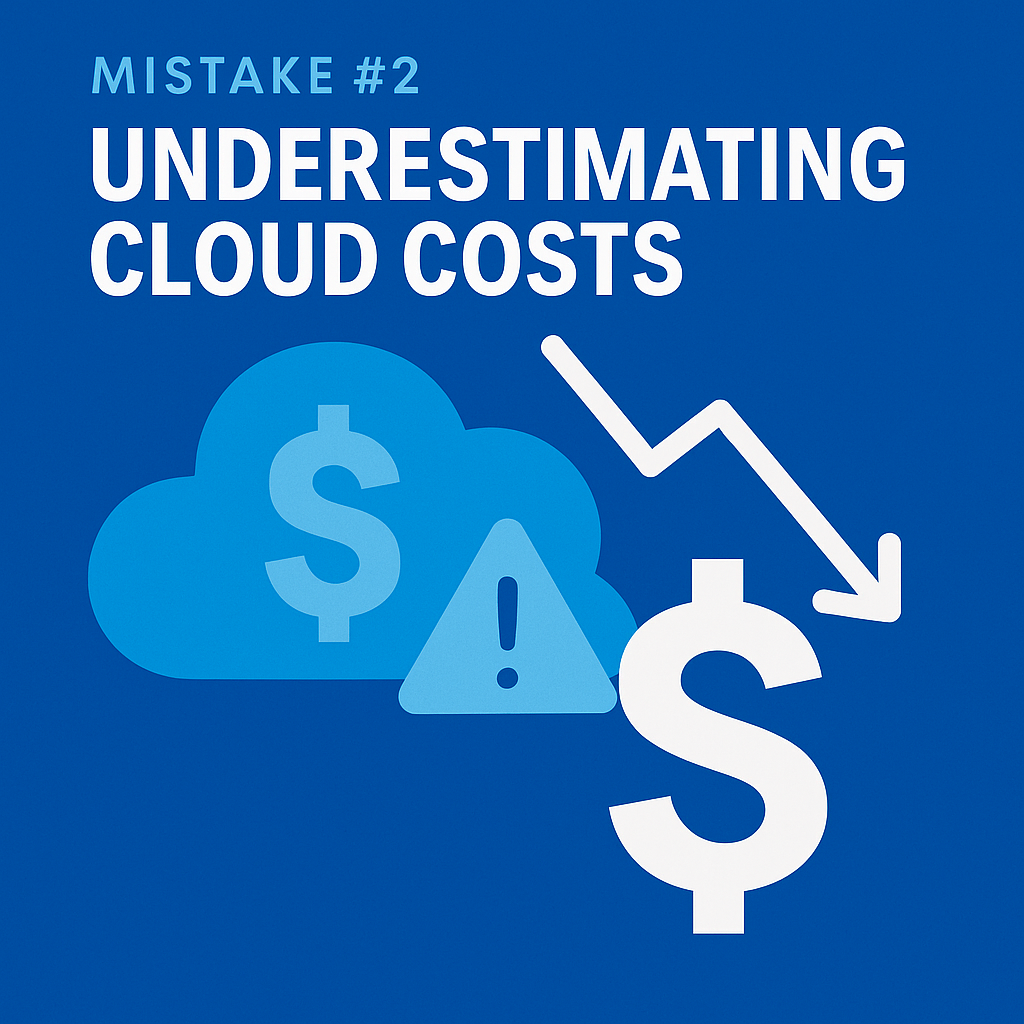
Cloud environments become expensive when idle resources run 24/7, data egress fees accumulate, storage tiers are chosen poorly, overprovisioned VMs remain untouched, and teams deploy resources without governance.
Companies typically experience 30%–50% overspend in the first 12 months because visibility and governance weren't set up early.
- Implement cost monitoring on day one
- Use reserved instances and autoscaling
- Enforce tagging policies across all resources
- Set up budget alerts and spending guardrails
Mistake #3 — Weak Identity & Access Strategy (Breaches Start Here)
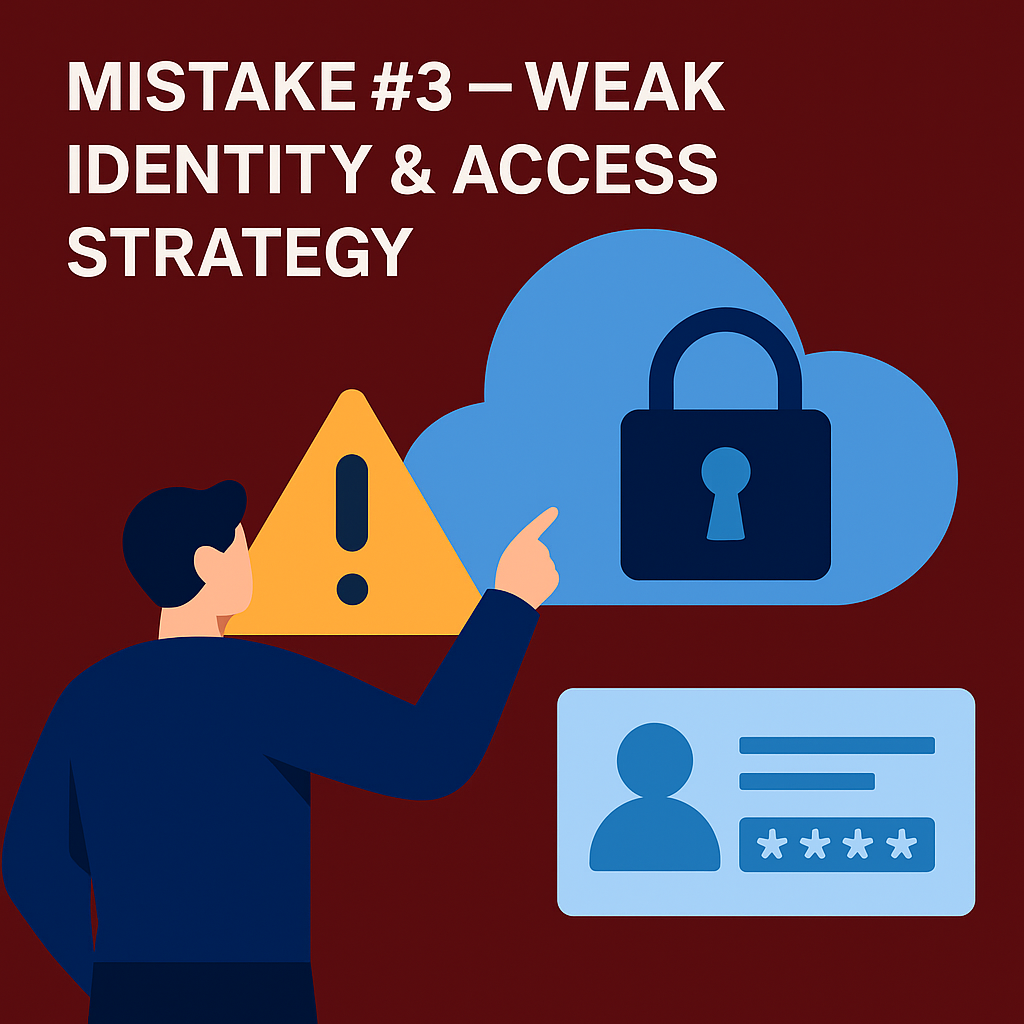
Cloud environments amplify identity risk. If you migrate without proper controls, attackers only need one compromised credential to pivot into your entire environment.
Most breaches after cloud migration occur because of no MFA, overprivileged accounts, missing conditional access, legacy authentication still enabled, and poor admin role separation.
- Enforce MFA across all cloud services
- Disable legacy authentication protocols
- Apply least privilege and role separation
- Implement Conditional Access policies
- Monitor sign-in risk in real time
Mistake #4 — Moving Everything at Once (Guaranteed Chaos)
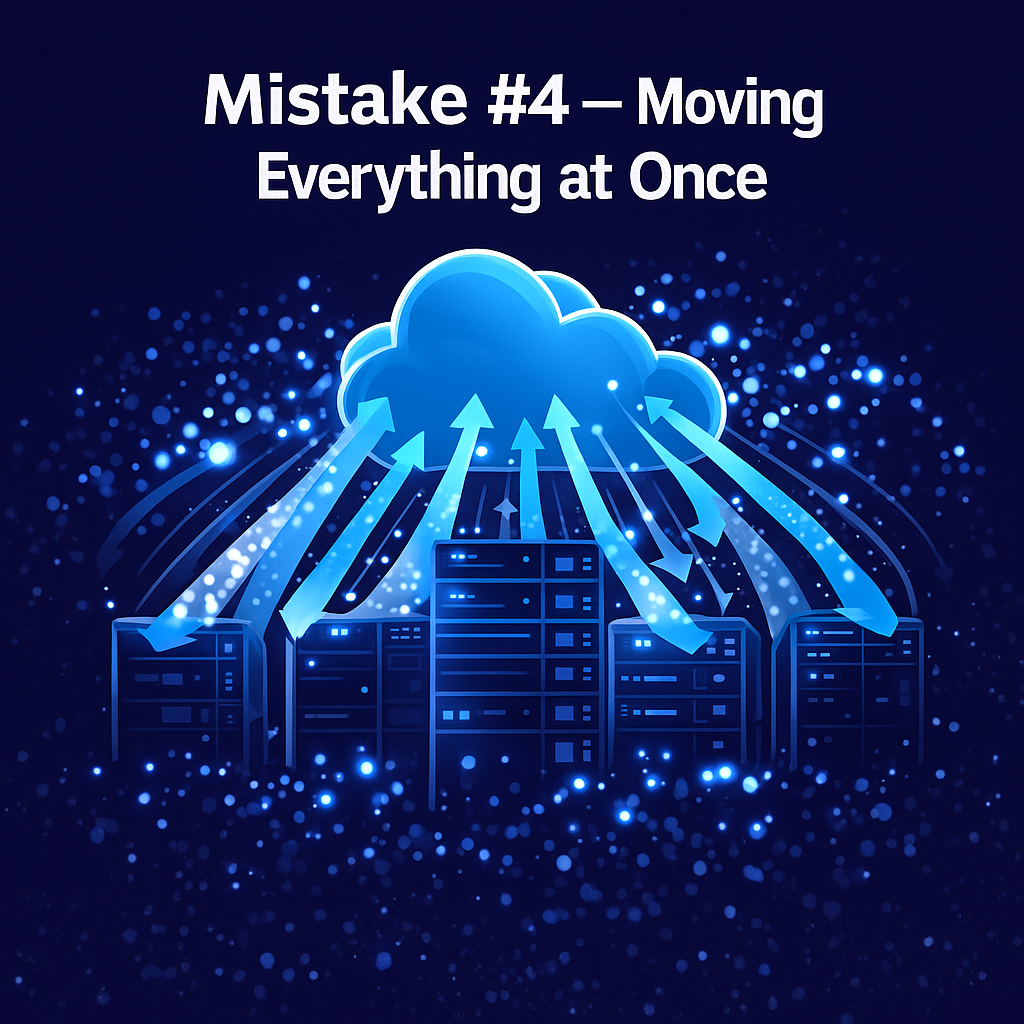
A frequent and costly mistake: migrating entire environments simultaneously. This creates extended outages, rolled-back migrations, conflicting tools, lost data, and broken integrations.
- Use phased migration waves
- Validate each workload after cutover
- Test failovers and rollback plans before going live
- Run hybrid coexistence before full cutover
Mistake #5 — Ignoring Security Hardening During Migration
Many teams assume cloud providers handle security. They don't. Cloud uses a shared responsibility model — and ignoring your side of the equation leads to misconfigurations that attackers exploit.
- Public storage buckets with no access controls
- Open RDP/SSH ports exposed to the internet
- Missing encryption at rest and in transit
- Unrestricted service accounts
- No monitoring or log retention
- Harden environments during migration — not after
- Enforce Zero Trust principles from day one
- Enable logging, SIEM integration, and continuous monitoring
- Set up automated remediation for misconfigurations
Final Thoughts — Cloud Success Requires Strategy, Not Speed
Cloud migration is not simply a technical project. It is a business transformation requiring planning, cost governance, identity security, modernization, and ongoing optimization.
- Treat cloud as a strategic investment — not a cost-cutting exercise
- Focus on architecture and security, not shortcuts
- Secure identity and access from day one
- Control costs proactively with governance guardrails
- Modernize instead of re-hosting legacy problems
Ready to plan a migration that doesn't become a million-dollar problem? Schedule a consultation with Joseph Marashlian for hands-on advisory, security architecture, and full migration support.